Q: What are microcarriers, and what role do they play in cell culture?
A: Microcarriers are a type of microspherical scaffold used in cell culture. Typically ranging in size from 50-350 µm in diameter, these carriers provide a surface for cells to adhere to, facilitating their growth and proliferation. Microcarriers are often employed in large-scale cell culture applications, where they support both the attachment of adherent cells and the differentiation of specific cell types. They also play a crucial role in biopharmaceutical production by enabling the cultivation of cells in bioreactors.
Q: What types of microcarriers are available for use, and how are they classified?
A: Microcarriers can be classified based on the materials they are made from, as well as their shapes. Some common materials include:
- Dextran Microcarriers: Suitable for many animal cells that adhere to surfaces in vitro.
- Gelatin Microcarriers: Ideal for cells like human bone marrow mesenchymal stem cells.
- Cellulose Microcarriers: Often used for producing recombinant products or monoclonal antibodies in CHO (Chinese Hamster Ovary), BHK (Baby Hamster Kidney), and hybridoma cells.
- Polystyrene Microcarriers: Applied in fluidized bed perfusion cultures, especially for CHO cells.
- Polyester Fiber Microcarriers: Mainly for mammalian cell monolayer cultures. Other variations include polyurethane foam, alginate gel, and magnetic microcarriers. These carriers come in various shapes such as spherical, flaky, fibrous, and microporous, depending on the type of cell being cultured and the intended application.
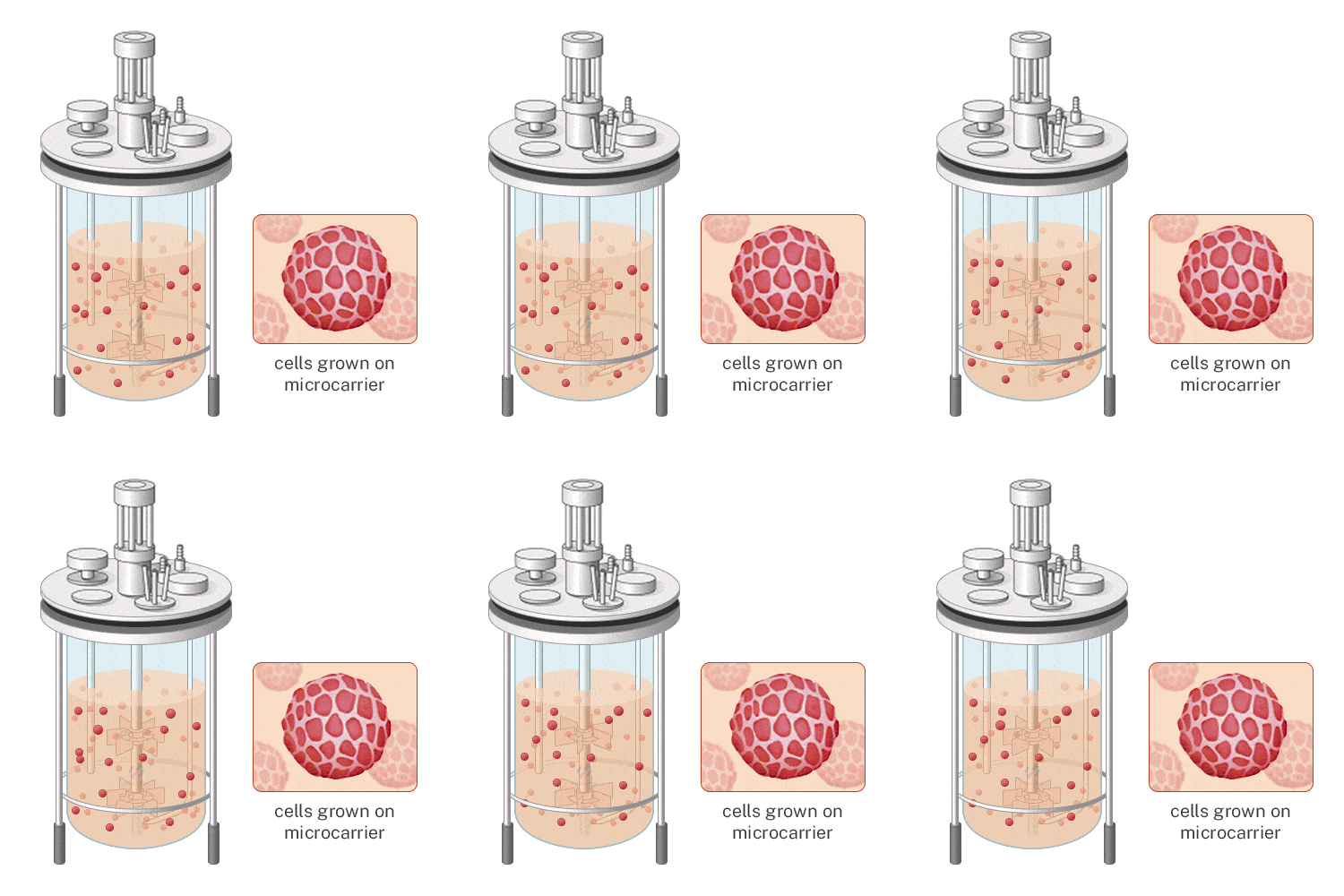
Q: Can you explain the specific advantages of the HCD-001 and HCD-003 microcarriers?
A: The HCD-001 microcarriers are dextran-based, spherical carriers coated with animal-free recombinant collagen. This unique coating enhances cell attachment efficiency, making them particularly suitable for expanding hard-to-culture cells like MSCs (mesenchymal stem cells), Vero cells, and others under serum-free conditions. The surface area is designed to maximize cell density, making them ideal for large-scale cell culture. Additionally, the HCD-001 microcarriers are compatible with various bioreactor systems and support easy harvesting, preserving cell viability.
The HCD-003 microcarriers are soluble 3D microcarriers that offer a high-density cultivation environment, especially for difficult-to-culture cells like MSCs, Vero, and MRC-5. The 3D structure provides an ideal environment for serum-free or low-serum cultures. They are also biodegradable, allowing for easy cell recovery with a high efficiency rate. These microcarriers are versatile and suitable for a range of applications, including cell therapy, vaccine production, and biopharmaceutical manufacturing.
Q: How are microcarriers sterilized and packaged for use?
A: Microcarriers like the HCD-001G undergo gamma irradiation sterilization to ensure they meet strict sterility standards. They are then packaged in PC (polycarbonate) containers with specialized transfer conduits, ensuring they remain sterile until ready for use. This process eliminates the need for additional cleaning or autoclaving steps by the end user.
Q: What are the key considerations when choosing a microcarrier for cell culture?
A: When selecting a microcarrier, several factors must be taken into account:
- Cell Type: Different cell types may require specific microcarriers for optimal growth. For example, stem cells, mammalian cells, and recombinant cell lines may have different attachment preferences.
- Culture Conditions: Whether the cells require serum or serum-free conditions, and the need for high-density or low-density cultivation.
- Material Properties: The material should support cell attachment, proliferation, and differentiation. It must also be biocompatible and compatible with the culture medium.
- Cost: The cost of the microcarriers should be considered in the context of the scale of cell culture being performed.
- Recovery and Harvesting: Consideration should be given to how easily the cells can be separated from the microcarriers post-cultivation.
Q: Can microcarriers support large-scale cell culture processes?
A: Yes, microcarriers are specifically designed for large-scale cell culture. They provide a large surface area for cell attachment in bioreactor systems, making them ideal for industrial-scale production of cells, such as for the manufacture of biopharmaceuticals, vaccines, and cultured meat. Microcarriers like HCD-001 and HCD-003 offer compatibility with different types of bioreactors, including stirred-tank reactors, single-use reactors, and shake flasks, which supports scalable production processes.
More questions to solve?
More Questions
More Questions
[Microcarriers] Q: What are microcarriers, and what role do they play in cell culture? A: Microcarriers are a type of microspherical scaffold used in cell culture. Typically ranging in size from 50-350 m in diameter, these carriers provide a surface for cells to adhe...
[Stainless Steel Fermenters] HOLVES Su310 intelligent stainless steel fermenter is a new generation of pilot and small-scale production equipment, integrating hardware innovation and intelligent control. In the pharmaceutical industry, stainless steel fermenters are crucial for p...
[Microcarriers] Microcarrier (Microcarrier) means a class of microspherical scaffolds with a diameter of 50-350 m and a density slightly higher than that of water, which have biological functions such as cell culture, proliferation and delivery. During the process of...
[Bioreactors] A bioreactor precisely controls key process parameterssuch as temperature, pH, dissolved oxygen (DO), and agitation speedto provide optimal growth and metabolic conditions for microorganisms, animal and plant cells, or enzymes. This enables efficient ...
[Bioreactors] Biological Reactions in Bioreactors: Advanced Solutions for Efficient Fermentation...
[Ceramic Membrane Filtration] Ceramic membrane filtration is a physical separation process that uses ceramic materials with porous structures to separate particles, microorganisms, and dissolved substances from liquids....
[Tangential Flow Filtration] The Application of Tangential Flow Filtration Cassettes...
[Photobioreactor] Photobioreactors are specialized cultivation systems designed to grow photosynthetic microorganisms such as microalgae, cyanobacteria, and other photosynthetic cells under controlled environmental conditions. Lab-scale photobioreactor systems serve as...
[Four-Piston Diaphragm Pumps] What is a Four-Piston Diaphragm Pump? How Does a Four-Piston Diaphragm Pump Work? What Are the Key Advantages of Four-Piston Diaphragm Pumps?...
[Fermenters] Optimizing Fermenters for Enhanced Production...
