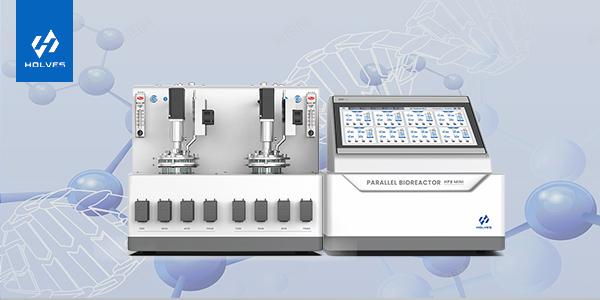
Parallel bioreactors enable the simultaneous preparation of multiple proteins or antibodies in one or more cell culture units through the simultaneous cultivation of two or more units of the same or different types. It has the following advantages over traditional cell culture:
1. Decrease production costs
Parallel bioreactors can significantly decrease cell culture costs. Within a unit, a cell culture system typically consists of a cell culture tank. The system consists of a series of cell culture units, each including a bioreactor and a centrifuge.
Each unit can be utilized multiple times depending on the type of product desired. In addition, since each unit has the same culture cycle, there is no need to set up additional reactors for amplification during the production process, which can greatly reduce production costs.
2、Improve culture efficiency
Compared with traditional cell culture, parallel bioreactor can greatly improve the efficiency of cell growth, and can significantly increase the yield of cell products. The ways of cell culture in parallel bioreactor mainly include batch replenishment culture, batch shake flask culture and batch fermentation.
3、Improve the environment of cell culture
When cells grow in liquid, they cannot move freely due to their sensitivity to the liquid environment, and the flow rate of the liquid stream also affects cell growth. Parallel bioreactor can change the liquid environment by changing the stirring speed, stirring direction and liquid flow direction, so as to improve the efficiency of cell growth and product production.
4、Increase product yield
Another important advantage of parallel bioreactors is the ability to increase product yields through differences in cellular metabolic pathways, thus better meeting the needs of different drugs and medical products. For example, some biopharmaceutical companies also use parallel bioreactors for antibody production. By adding two different types of antibodies to the same batch of medium, antibodies with different potencies are obtained, thus achieving the purpose of improving antibody potency, reducing production costs, minimizing side reactions and improving the stability of drug production. Due to the different requirements of biopharmaceutical companies for antibody drugs, parallel bioreactors have different advantages in different situations.
Here is the Holves brand website, https://www.bjholves.com/. Providing different types of industry information, technical knowledge, and solutions, we have developed and produced several new laboratory fermenter, bioreactor, tangential flow filtration system and other equipment to meet your needs from experimental to industrial production.
More questions to solve?
More Questions
More Questions
[Microcarriers] Q: What are microcarriers, and what role do they play in cell culture? A: Microcarriers are a type of microspherical scaffold used in cell culture. Typically ranging in size from 50-350 m in diameter, these carriers provide a surface for cells to adhe...
[Stainless Steel Fermenters] HOLVES Su310 intelligent stainless steel fermenter is a new generation of pilot and small-scale production equipment, integrating hardware innovation and intelligent control. In the pharmaceutical industry, stainless steel fermenters are crucial for p...
[Microcarriers] Microcarrier (Microcarrier) means a class of microspherical scaffolds with a diameter of 50-350 m and a density slightly higher than that of water, which have biological functions such as cell culture, proliferation and delivery. During the process of...
[Bioreactors] A bioreactor precisely controls key process parameterssuch as temperature, pH, dissolved oxygen (DO), and agitation speedto provide optimal growth and metabolic conditions for microorganisms, animal and plant cells, or enzymes. This enables efficient ...
[Bioreactors] Biological Reactions in Bioreactors: Advanced Solutions for Efficient Fermentation...
[Ceramic Membrane Filtration] Ceramic membrane filtration is a physical separation process that uses ceramic materials with porous structures to separate particles, microorganisms, and dissolved substances from liquids....
[Tangential Flow Filtration] The Application of Tangential Flow Filtration Cassettes...
[Photobioreactor] Photobioreactors are specialized cultivation systems designed to grow photosynthetic microorganisms such as microalgae, cyanobacteria, and other photosynthetic cells under controlled environmental conditions. Lab-scale photobioreactor systems serve as...
[Four-Piston Diaphragm Pumps] What is a Four-Piston Diaphragm Pump? How Does a Four-Piston Diaphragm Pump Work? What Are the Key Advantages of Four-Piston Diaphragm Pumps?...
[Fermenters] Optimizing Fermenters for Enhanced Production...
