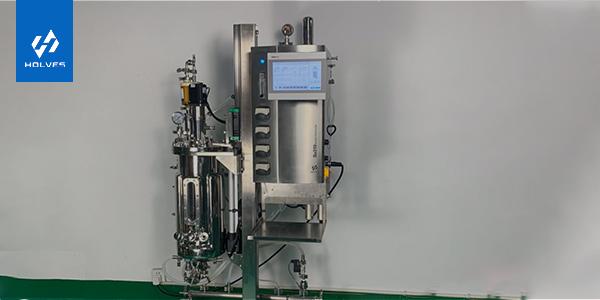
1. The choice of fermenter should first be based on the characteristics and uses of the fermented products. Stainless steel, mostly used in beverage fermentation equipment, is the most commonly used material for fermenters because of its excellent corrosion resistance and high temperature resistance.
2. The main function of a fermenter is to do fermentation. After determining the fermentation unit, we also have to analyze its performance, such as temperature, pressure, speed, etc. We have to choose the right fermenter according to the heat generated during the fermentation process to ensure that it can operate normally.
3. After determining the fermenter, it should also take into account whether there is a good sealing performance to avoid air leakage or affect the product quality.
4. After considering the cost and other factors, the right capacity is also selected according to the output of the product.
5. After selecting a suitable fermenter, attention must also be paid to its ability to withstand the pressures and temperatures generated during normal operation.
6. The fermentation vessel used should be sterilized to avoid secondary contamination.
7. After choosing a suitable fermenter,it should also be managed and maintained on a daily basis, such as regular cleaning of the equipment to ensure its normal operation.
8. The equipment should be checked regularly for problems such as malfunction or the presence of defects to ensure that it can operate properly.
9. Professional technical training and safety training should be conducted for the operators used to ensure that the operators can master the appropriate operating skills.
More questions to solve?
More Questions
More Questions
[Microcarriers] Q: What are microcarriers, and what role do they play in cell culture? A: Microcarriers are a type of microspherical scaffold used in cell culture. Typically ranging in size from 50-350 m in diameter, these carriers provide a surface for cells to adhe...
[Stainless Steel Fermenters] HOLVES Su310 intelligent stainless steel fermenter is a new generation of pilot and small-scale production equipment, integrating hardware innovation and intelligent control. In the pharmaceutical industry, stainless steel fermenters are crucial for p...
[Microcarriers] Microcarrier (Microcarrier) means a class of microspherical scaffolds with a diameter of 50-350 m and a density slightly higher than that of water, which have biological functions such as cell culture, proliferation and delivery. During the process of...
[Bioreactors] A bioreactor precisely controls key process parameterssuch as temperature, pH, dissolved oxygen (DO), and agitation speedto provide optimal growth and metabolic conditions for microorganisms, animal and plant cells, or enzymes. This enables efficient ...
[Bioreactors] Biological Reactions in Bioreactors: Advanced Solutions for Efficient Fermentation...
[Ceramic Membrane Filtration] Ceramic membrane filtration is a physical separation process that uses ceramic materials with porous structures to separate particles, microorganisms, and dissolved substances from liquids....
[Tangential Flow Filtration] The Application of Tangential Flow Filtration Cassettes...
[Photobioreactor] Photobioreactors are specialized cultivation systems designed to grow photosynthetic microorganisms such as microalgae, cyanobacteria, and other photosynthetic cells under controlled environmental conditions. Lab-scale photobioreactor systems serve as...
[Four-Piston Diaphragm Pumps] What is a Four-Piston Diaphragm Pump? How Does a Four-Piston Diaphragm Pump Work? What Are the Key Advantages of Four-Piston Diaphragm Pumps?...
[Fermenters] Optimizing Fermenters for Enhanced Production...
