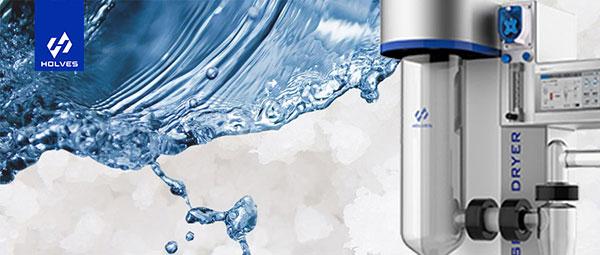
Types of atomizers for small spray dryers
1. Centrifugal atomizer: using high-speed rotation to generate shear force, the liquid will be dispersed into fine droplets. It is characterized by simple structure and easy maintenance, but the atomization effect is greatly affected by the viscosity of the liquid.
2. Pressure type atomizer: The liquid is delivered to the nozzle through a high-pressure pump to form fog droplets. This type of atomizer is suitable for high viscosity liquids, but requires high pressure stability of the pump.
3. Airflow atomizer: the use of compressed air at high speed from the nozzle spray, and with another channel conveying the material mixture, with the relative speed between the gas-liquid phase of the friction generated by the difference between the two phases of the liquid, so that the material is split into droplets.
Types of drying towers for small spray dryers
The internal material of the drying chamber should have good corrosion resistance and high temperature resistance to adapt to different drying environments, the common ones are stainless steel drying tower, Plexiglas drying tower and so on.
Different heating methods for small spray dryers
1. Electric heating: through the electric energy to produce heat, dry materials. Simple operation, easy to control, but the thermal efficiency is relatively low.
2. Steam heating: steam heating is a more common heating method, through the introduction of steam to heating. This way of high thermal efficiency, suitable for large-scale production, but requires a stable supply of steam.
Here is the Holves brand website, https://www.bjholves.com/. Providing different types of industry information, technical knowledge, and solutions, we have developed and produced several new laboratory fermenter, bioreactor, tangential flow filtration system and other equipment to meet your needs from experimental to industrial production.
More questions to solve?
More Questions
More Questions
[Microcarriers] Q: What are microcarriers, and what role do they play in cell culture? A: Microcarriers are a type of microspherical scaffold used in cell culture. Typically ranging in size from 50-350 m in diameter, these carriers provide a surface for cells to adhe...
[Stainless Steel Fermenters] HOLVES Su310 intelligent stainless steel fermenter is a new generation of pilot and small-scale production equipment, integrating hardware innovation and intelligent control. In the pharmaceutical industry, stainless steel fermenters are crucial for p...
[Microcarriers] Microcarrier (Microcarrier) means a class of microspherical scaffolds with a diameter of 50-350 m and a density slightly higher than that of water, which have biological functions such as cell culture, proliferation and delivery. During the process of...
[Bioreactors] A bioreactor precisely controls key process parameterssuch as temperature, pH, dissolved oxygen (DO), and agitation speedto provide optimal growth and metabolic conditions for microorganisms, animal and plant cells, or enzymes. This enables efficient ...
[Bioreactors] Biological Reactions in Bioreactors: Advanced Solutions for Efficient Fermentation...
[Ceramic Membrane Filtration] Ceramic membrane filtration is a physical separation process that uses ceramic materials with porous structures to separate particles, microorganisms, and dissolved substances from liquids....
[Tangential Flow Filtration] The Application of Tangential Flow Filtration Cassettes...
[Photobioreactor] Photobioreactors are specialized cultivation systems designed to grow photosynthetic microorganisms such as microalgae, cyanobacteria, and other photosynthetic cells under controlled environmental conditions. Lab-scale photobioreactor systems serve as...
[Four-Piston Diaphragm Pumps] What is a Four-Piston Diaphragm Pump? How Does a Four-Piston Diaphragm Pump Work? What Are the Key Advantages of Four-Piston Diaphragm Pumps?...
[Fermenters] Optimizing Fermenters for Enhanced Production...
