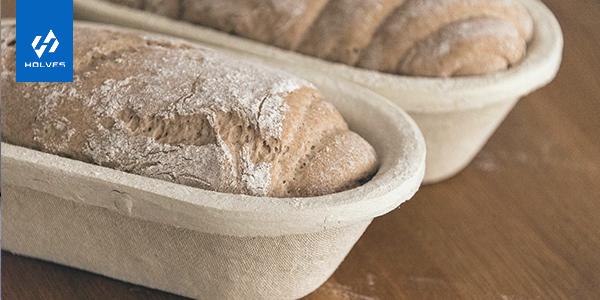
Fermenters are amazing vessels.It is not only a key tool in the food fermentation process, but also a secret device for making delicious food. Let's explore the mystery of fermenter together.
First of all, fermenters are usually made of non-reactive materials such as stainless steel or glass. This prevents impurities from interfering with the fermentation process and keeps the food pure.
Secondly, the fermenter has good air permeability. It allows air and microorganisms to move in and out of the vessel to promote fermentation. The breathable design also prevents too much carbon dioxide from accumulating inside the vessel and avoids too much pressure during the food fermentation process.
Most of all, fermenters provide an ideal environment for the food to encourage the growth of microorganisms. When the right moisture, temperature and nutrients are present in the food, the fermenter becomes a paradise for microorganisms. The microorganisms will break down the sugars in the food and produce lactic acid, acetic acid and other beneficial substances, making the food more flavorful and delicious.
Fermenter has a wide range of applications. It is indispensable for the production of traditional foods such as bread, yogurt, vegetable kimchi and so on. In addition, more and more people are starting to make their own fermented foods at home, such as enzyme drinks and fermented vegetables. Fermenter provides a simple, safe and efficient fermentation environment for these families to enjoy pure natural, healthy and delicious food.
Certainly, the use of fermenters requires some skills and experience. Firstly, it is necessary to choose suitable ingredients and fermentation strains to ensure the quality and taste of the food. Secondly, it is necessary to know the right fermentation time and temperature to avoid over-fermentation or under-fermentation. Finally, the cleaning and maintenance of the fermenter is also very important to keep the vessel hygienic and breathable.
More questions to solve?
More Questions
More Questions
[Microcarriers] Q: What are microcarriers, and what role do they play in cell culture? A: Microcarriers are a type of microspherical scaffold used in cell culture. Typically ranging in size from 50-350 m in diameter, these carriers provide a surface for cells to adhe...
[Stainless Steel Fermenters] HOLVES Su310 intelligent stainless steel fermenter is a new generation of pilot and small-scale production equipment, integrating hardware innovation and intelligent control. In the pharmaceutical industry, stainless steel fermenters are crucial for p...
[Microcarriers] Microcarrier (Microcarrier) means a class of microspherical scaffolds with a diameter of 50-350 m and a density slightly higher than that of water, which have biological functions such as cell culture, proliferation and delivery. During the process of...
[Bioreactors] A bioreactor precisely controls key process parameterssuch as temperature, pH, dissolved oxygen (DO), and agitation speedto provide optimal growth and metabolic conditions for microorganisms, animal and plant cells, or enzymes. This enables efficient ...
[Bioreactors] Biological Reactions in Bioreactors: Advanced Solutions for Efficient Fermentation...
[Ceramic Membrane Filtration] Ceramic membrane filtration is a physical separation process that uses ceramic materials with porous structures to separate particles, microorganisms, and dissolved substances from liquids....
[Tangential Flow Filtration] The Application of Tangential Flow Filtration Cassettes...
[Photobioreactor] Photobioreactors are specialized cultivation systems designed to grow photosynthetic microorganisms such as microalgae, cyanobacteria, and other photosynthetic cells under controlled environmental conditions. Lab-scale photobioreactor systems serve as...
[Four-Piston Diaphragm Pumps] What is a Four-Piston Diaphragm Pump? How Does a Four-Piston Diaphragm Pump Work? What Are the Key Advantages of Four-Piston Diaphragm Pumps?...
[Fermenters] Optimizing Fermenters for Enhanced Production...
