Applications of Stainless Steel Fermenters in the Pharmaceutical Industry

HOLVES Su310 intelligent stainless steel fermenter is a new generation of pilot and small-scale production equipment, integrating hardware innovation and intelligent control.

In the pharmaceutical industry, stainless steel fermenters are crucial for producing a wide range of biopharmaceutical products. 
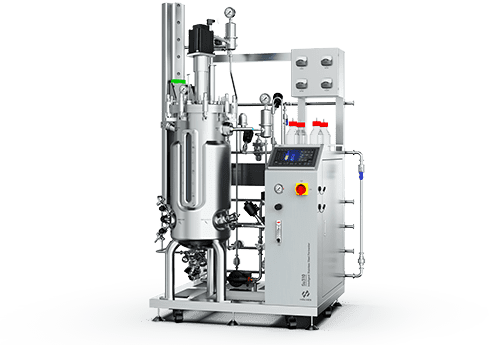
 
Stainless Steel Fermenters
 
Their main applications include:
 
Antibiotic Production: Stainless steel fermenters are extensively used in the fermentation process for the production of antibiotics such as penicillin, streptomycin, and erythromycin. The controlled environment they provide allows for the cultivation of microorganisms (like fungi and bacteria) that produce these medicinal compounds.
 
Vaccine Production: Stainless steel fermenters are also used in the production of vaccines. They offer the sterile conditions necessary for cultivating viruses or bacteria used in the vaccine manufacturing process. For example, vaccines for diseases like influenza, polio, and hepatitis may be produced using fermentation.
 
Monoclonal Antibody Production: Monoclonal antibodies, used in cancer therapies, autoimmune disease treatments, and other biopharmaceuticals, are often produced through a fermentation process using genetically engineered cell lines. Stainless steel fermenters are preferred due to their ability to maintain sterile, controlled environments suitable for the growth of these cell cultures.
 
Enzyme Production: Stainless steel fermenters are used to grow microorganisms that produce enzymes, which are essential in pharmaceutical manufacturing. These enzymes can be used in drug formulations, diagnostics, and as therapeutic agents in conditions like enzyme deficiencies.
 
Bioreactor Applications: In pharmaceutical manufacturing, stainless steel fermenters act as bioreactors where microorganisms or mammalian cells are cultured to produce biopharmaceuticals such as hormones, proteins, and other biologic drugs. The robust and clean nature of stainless steel makes it ideal for the bioprocessing environments where contamination and sterility are critical.
 
Cell Culture for Biopharmaceuticals: In addition to microbial fermentation, stainless steel fermenters can be used for mammalian cell culture. These cultures are essential for the production of complex biologics like monoclonal antibodies and therapeutic proteins.
 
Overall, stainless steel fermenters are a cornerstone of biopharmaceutical production due to their ability to provide the required sterile, controlled environment for high-yield, high-purity production of drugs and biologics.

More questions to solve?


More Questions

More Questions

The Role of Microcarriers in Modern Cell Culture Practices

[Microcarriers] Q: What are microcarriers, and what role do they play in cell culture? A: Microcarriers are a type of microspherical scaffold used in cell culture. Typically ranging in size from 50-350 m in diameter, these carriers provide a surface for cells to adhe...

Applications of Stainless Steel Fermenters in the Pharmaceutical Industry

[Stainless Steel Fermenters] HOLVES Su310 intelligent stainless steel fermenter is a new generation of pilot and small-scale production equipment, integrating hardware innovation and intelligent control. In the pharmaceutical industry, stainless steel fermenters are crucial for p...

Microcarriers in Cell Culture: Your Questions Answered

[Microcarriers] Microcarrier (Microcarrier) means a class of microspherical scaffolds with a diameter of 50-350 m and a density slightly higher than that of water, which have biological functions such as cell culture, proliferation and delivery. During the process of...

The Application of Benchtop Bioreactors in the Laboratory

[Bioreactors] A bioreactor precisely controls key process parameterssuch as temperature, pH, dissolved oxygen (DO), and agitation speedto provide optimal growth and metabolic conditions for microorganisms, animal and plant cells, or enzymes. This enables efficient ...

Biological Reactions in Bioreactors: Advanced Solutions for Efficient Fermentation

[Bioreactors] Biological Reactions in Bioreactors: Advanced Solutions for Efficient Fermentation...

Application of Ceramic Membrane Filtration

[Ceramic Membrane Filtration] Ceramic membrane filtration is a physical separation process that uses ceramic materials with porous structures to separate particles, microorganisms, and dissolved substances from liquids....

The Application of Tangential Flow Filtration Cassettes

[Tangential Flow Filtration] The Application of Tangential Flow Filtration Cassettes...

Lab-Scale Photobioreactor Systems and Their Applications in the Laboratory

[Photobioreactor] Photobioreactors are specialized cultivation systems designed to grow photosynthetic microorganisms such as microalgae, cyanobacteria, and other photosynthetic cells under controlled environmental conditions. Lab-scale photobioreactor systems serve as...

Everything You Need to Know About Four-Piston Diaphragm Pumps

[Four-Piston Diaphragm Pumps] What is a Four-Piston Diaphragm Pump? How Does a Four-Piston Diaphragm Pump Work? What Are the Key Advantages of Four-Piston Diaphragm Pumps?...

Microbial Fermentation Control Systems: Optimizing Fermenters for Enhanced Production

[Fermenters] Optimizing Fermenters for Enhanced Production...

1/2

Contact

MyDreamPlus 4/F, Changying Future Building, Chaoyang District, Beijing – China

+86 (10) 64919358
Contact us

LinkedIn Youtube WhatsApp Wechat HOLVES Wechat

Our website uses cookie to improve usability. By clicking “Accept”, you consent to the use of ALL the cookie. For more information, please click here.

Accept Close