In a previous article, we discussed in detail the guidelines for the daily maintenance of fermenters. These range from inspecting mechanical seals to calibrating sensors, and from cleaning piping to replacing filter cartridges. The essence of maintenance is to keep the equipment “running smoothly” and to avoid downtime and losses caused by malfunctions.
However, “working in a healthy way” ≠ “working economically.”
In aerobic fermentation, stirrer motors and air compressors are often the largest consumers of electricity in laboratories and production facilities. The energy consumed by stirring may account for about half of the total energy used throughout the entire fermentation process.
In aerobic fermentation, stirrer motors and air compressors are often the largest consumers of electricity in laboratories and production facilities. The energy consumed by stirring may account for about half of the total energy used throughout the entire fermentation process.
While we focus on equipment maintenance, have we overlooked energy conservation and consumption reduction—a perspective that is just as important as maintenance, yet is often neglected…
-
Energy Consumption of Fermenters
Energy consumption in aerobic fermentation is primarily concentrated in four areas:
1.Agitation system: A motor drives the impeller to rotate, overcoming the viscous resistance of the fermentation broth;
2.Aeration system: An air compressor pressurizes ambient air and feeds it into the tank to supply the oxygen required by microorganisms;
3.Temperature control system: The refrigeration unit or steam valves operate frequently to maintain a constant fermentation temperature;
4.CIP cleaning system: The consumption of hot water, detergents, and steam is also significant.
Taken together, these factors constitute the primary operating costs of fermentation operations.
1.Agitation system: A motor drives the impeller to rotate, overcoming the viscous resistance of the fermentation broth;
2.Aeration system: An air compressor pressurizes ambient air and feeds it into the tank to supply the oxygen required by microorganisms;
3.Temperature control system: The refrigeration unit or steam valves operate frequently to maintain a constant fermentation temperature;
4.CIP cleaning system: The consumption of hot water, detergents, and steam is also significant.
Taken together, these factors constitute the primary operating costs of fermentation operations.
-
How can the energy consumption issue in fermenters be resolved?
Ⅰ Agitation
The goal of agitation is not to rotate as fast as possible, but to achieve thorough mixing and mass transfer with minimal power consumption.
The goal of agitation is not to rotate as fast as possible, but to achieve thorough mixing and mass transfer with minimal power consumption.
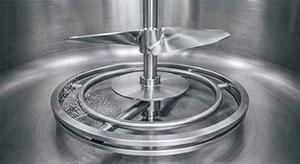
1. Impeller Selection and Configuration: Traditional radial-flow impellers (such as the Rushton impeller) excel at gas dispersion but have limited axial mixing capability. In high-viscosity fermentation, combining radial-flow impellers with axial-flow impellers can enhance overall axial circulation while ensuring gas dispersion, resulting in greater energy efficiency than using a single type of impeller.
2. Air Distributor Optimization: The way air enters the fermentation broth through the distributor directly affects the dissolved air content and oxygen mass transfer efficiency. Traditional single-tube distributors produce large, unevenly distributed bubbles. Upgrading from a single-tube distributor to a double-layer annular distributor can significantly improve gas retention and mass transfer efficiency—meaning the same volumetric oxygen transfer coefficient (KLa) can be achieved at lower stirring speeds, directly reducing stirring power consumption.
3. DO-linked stirring control: By setting a lower limit for dissolved oxygen (DO), the stirring speed is gradually increased only when DO falls below the threshold. This strategy avoids continuous operation at high speeds.
Ⅱ Ventilation
3. DO-linked stirring control: By setting a lower limit for dissolved oxygen (DO), the stirring speed is gradually increased only when DO falls below the threshold. This strategy avoids continuous operation at high speeds.
Ⅱ Ventilation
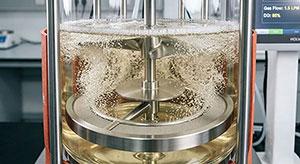
1. DO Cascade Control Strategy: Set the agitation speed and aeration rate to operate in a cascade relationship, prioritizing improved mass transfer by increasing the agitation speed first; once the agitation speed reaches its upper limit, the aeration rate is then increased.
2. Balance Between Pressure and Dissolved Oxygen: Appropriately increasing tank pressure can enhance the solubility of oxygen in the fermentation broth, thereby improving oxygen supply. However, higher tank pressure also means the air compressor must deliver higher pressure, resulting in increased power consumption. Conversely, excessively high tank pressure may inhibit the metabolism of certain microorganisms. Therefore, an appropriate balance must be found when setting the tank pressure.
3. Exhaust Gas Monitoring Function: An online exhaust gas monitoring system measures the oxygen and carbon dioxide concentrations in the exhaust gas in real time to calculate the oxygen uptake rate (OUR). The OUR directly reflects the current oxygen consumption rate of the microorganisms, allowing for on-demand oxygen supply rather than blindly maintaining maximum aeration at all times. This “on-demand oxygen supply” strategy represents the ultimate goal for energy conservation in aeration systems.
Ⅲ Temperature Control
The energy consumption associated with temperature control in fermenters—whether cooling via a jacket filled with cold water or heating via coils filled with steam—is often underestimated during daily operations.
1. Variable-frequency operation of chillers: Replacing traditional fixed-frequency compressors with variable-frequency units allows the speed to be automatically adjusted based on actual cooling load requirements. When heat generation from fermentation decreases, the compressor can automatically reduce its frequency.
2. Utilizing peak-off-peak electricity rates: Energy-intensive processes in the fermentation process—such as medium sterilization and preheating of feedstock—can be scheduled according to production plans to occur during off-peak hours, effectively reducing costs. Of course, this does not constitute a technical upgrade at the equipment level; rather, it resembles the habit of “off-peak electricity usage” in daily life. Although the savings per batch may not be significant, when accumulated over the course of a year, they represent a “hidden profit” that should not be overlooked.
Ⅳ Daily Operations
Energy conservation is not just a matter of equipment and strategies; the daily habits of operators are equally critical.
1. A higher liquid level is not necessarily better: Some operators are in the habit of filling fermenters as full as possible, believing this prevents waste of vessel capacity. However, an excessively high liquid level can result in insufficient headspace, causing droplets to be carried along with the escaping gas and easily clogging the exhaust gas filter. A clogged filter means reduced aeration efficiency and may even force a shutdown to replace the filter cartridge—all of which represent hidden energy consumption and costs. It is recommended to keep the liquid level between 50% and 70% of the vessel's capacity.
2. Balance Between Pressure and Dissolved Oxygen: Appropriately increasing tank pressure can enhance the solubility of oxygen in the fermentation broth, thereby improving oxygen supply. However, higher tank pressure also means the air compressor must deliver higher pressure, resulting in increased power consumption. Conversely, excessively high tank pressure may inhibit the metabolism of certain microorganisms. Therefore, an appropriate balance must be found when setting the tank pressure.
3. Exhaust Gas Monitoring Function: An online exhaust gas monitoring system measures the oxygen and carbon dioxide concentrations in the exhaust gas in real time to calculate the oxygen uptake rate (OUR). The OUR directly reflects the current oxygen consumption rate of the microorganisms, allowing for on-demand oxygen supply rather than blindly maintaining maximum aeration at all times. This “on-demand oxygen supply” strategy represents the ultimate goal for energy conservation in aeration systems.
Ⅲ Temperature Control
The energy consumption associated with temperature control in fermenters—whether cooling via a jacket filled with cold water or heating via coils filled with steam—is often underestimated during daily operations.
1. Variable-frequency operation of chillers: Replacing traditional fixed-frequency compressors with variable-frequency units allows the speed to be automatically adjusted based on actual cooling load requirements. When heat generation from fermentation decreases, the compressor can automatically reduce its frequency.
2. Utilizing peak-off-peak electricity rates: Energy-intensive processes in the fermentation process—such as medium sterilization and preheating of feedstock—can be scheduled according to production plans to occur during off-peak hours, effectively reducing costs. Of course, this does not constitute a technical upgrade at the equipment level; rather, it resembles the habit of “off-peak electricity usage” in daily life. Although the savings per batch may not be significant, when accumulated over the course of a year, they represent a “hidden profit” that should not be overlooked.
Ⅳ Daily Operations
Energy conservation is not just a matter of equipment and strategies; the daily habits of operators are equally critical.
1. A higher liquid level is not necessarily better: Some operators are in the habit of filling fermenters as full as possible, believing this prevents waste of vessel capacity. However, an excessively high liquid level can result in insufficient headspace, causing droplets to be carried along with the escaping gas and easily clogging the exhaust gas filter. A clogged filter means reduced aeration efficiency and may even force a shutdown to replace the filter cartridge—all of which represent hidden energy consumption and costs. It is recommended to keep the liquid level between 50% and 70% of the vessel's capacity.
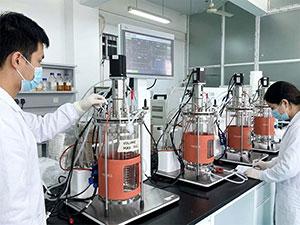
2. The Impact of Room Temperature on Cooling Energy Consumption: While the air conditioning temperature setting may seem unrelated to fermentation, it actually directly affects the cooling load on the jacket. Setting the air conditioning temperature to 25–26°C in the summer allows the fermenter jacket to remove only the heat generated by the fermentation process itself, without having to bear the additional burden of offsetting heat transferred from the high ambient temperature. This simple adjustment in habits can result in significant energy savings over the long term.
Cultivating process efficiency as a long-term competitive advantage is the true “long-term mindset” for laboratory and shop floor managers.
Maintenance keeps equipment “healthy”; energy conservation ensures it “operates efficiently.” Only when these two are combined does a comprehensive approach to equipment management emerge. When we begin to track where every kilowatt-hour of electricity goes, fermentation is no longer just a biological issue—it also becomes an economics lesson. And the results of this lesson will ultimately be reflected in your monthly electricity bill—and perhaps even in your net profit.
Cultivating process efficiency as a long-term competitive advantage is the true “long-term mindset” for laboratory and shop floor managers.
Maintenance keeps equipment “healthy”; energy conservation ensures it “operates efficiently.” Only when these two are combined does a comprehensive approach to equipment management emerge. When we begin to track where every kilowatt-hour of electricity goes, fermentation is no longer just a biological issue—it also becomes an economics lesson. And the results of this lesson will ultimately be reflected in your monthly electricity bill—and perhaps even in your net profit.
Want know more news information?
More News

OD600 measures all light-scattering particles and does not equate to the number of viable bacteria. The optical method tr ...
Read article "Online Monitoring of Viable Cell Concentration in Fermentation"
Energy conservation in aerobic fermentation focuses on optimizing the coordination of agitation and aeration, on-demand o ...
Read article "How Can Fermenters Save Energy?"
Continuous biomanufacturing overcomes the bottlenecks of batch production and drives the industry toward high efficiency ...
Read article "Why Choose Continuous Manufacturing"
Analyze four types of faults, including drift and delay in the fermentation process, and propose a closed-loop solution i ...
Read article "Common Issues and Solutions for MFM in Fermentation"