In biological fermentation processes, the precise metering of gases and liquids is a critical factor in determining product concentration, batch consistency, and even process scale-up. As the core sensing component for feed control, aeration optimization, and effluent discharge, the performance of mass flow meters directly impacts the stability of the metabolic environment.
So why do flow meters that pass laboratory calibration frequently malfunction once installed in a fermentation facility?
The answer to this question often lies not in the instrument itself, but in the systemic mismatch between the fermentation environment—characterized by humid and hot cycles, mechanical vibrations, gas-liquid alternation, and pressure fluctuations—and the flow meter’s design operating conditions.
So why do flow meters that pass laboratory calibration frequently malfunction once installed in a fermentation facility?
The answer to this question often lies not in the instrument itself, but in the systemic mismatch between the fermentation environment—characterized by humid and hot cycles, mechanical vibrations, gas-liquid alternation, and pressure fluctuations—and the flow meter’s design operating conditions.
-
The Key Role of Mass Flow Meters in Fermentation
The mass flow meter directly measures the mass of the medium passing through the sensor per unit time, unaffected by changes in volume density caused by variations in temperature and pressure. In the fermentation process, its core function lies in achieving precise measurement and monitoring of the fluid throughout the entire process, rather than simply measuring volumetric flow.
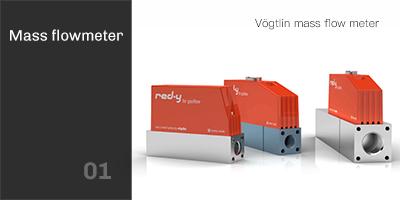
In aerobic fermentation, mass flow meters can accurately measure the supply rate of oxygen-containing gases, ensuring that dissolved oxygen (DO) concentrations are maintained within the optimal range for microbial metabolism. In high-density fermentation, monitoring multiple gas streams—including oxygen, nitrogen, and carbon dioxide—provides operators or control systems with data for adjustment. Combined with proportional valves or MFCs, this enables precise gas blending to prevent substrate inhibition or byproduct accumulation, thereby supporting metabolic regulation.
Meanwhile, mass flow meters can monitor the supply of critical fluids—such as feedstock and defoamers—in real time and transmit the data to the fermentation control system. The rate control of feedstock such as glucose, glycerol, and inducers requires mass accuracy down to the minute; mass flow meters provide real-time flow feedback to the system, which then maintains a stable microenvironment within the fermentation tank by adjusting parameters such as tank pressure, temperature, and pH.
Meanwhile, mass flow meters can monitor the supply of critical fluids—such as feedstock and defoamers—in real time and transmit the data to the fermentation control system. The rate control of feedstock such as glucose, glycerol, and inducers requires mass accuracy down to the minute; mass flow meters provide real-time flow feedback to the system, which then maintains a stable microenvironment within the fermentation tank by adjusting parameters such as tank pressure, temperature, and pH.
-
Common Issues in Daily Operations
Reading drift or zero-point drift
Output drift is the most common malfunction observed in mass flow meters at fermentation sites. It manifests as a non-zero output signal when no fluid is flowing, or as repeated fluctuations in the zero point under no-load conditions, which directly leads to control errors in feed addition, aeration, and other processes.
Output drift is the most common malfunction observed in mass flow meters at fermentation sites. It manifests as a non-zero output signal when no fluid is flowing, or as repeated fluctuations in the zero point under no-load conditions, which directly leads to control errors in feed addition, aeration, and other processes.
1.Improper installation: Misalignment between the sensor flange and the pipe flange, or uneven tightening of the connecting bolts, can cause stress from the pipeline to be transmitted to the measuring tube, affecting the symmetry of the sensing probe and resulting in zero-point fluctuations. Additionally, if the installation location is near vibrating equipment such as pumps or agitators, external vibrations can interfere with the natural frequency of the measuring tube.
2.Improper zero calibration: Zero calibration was not performed with the tube full and at rest.
3.Internal valve leakage: Poor sealing of the shut-off valves upstream and downstream of the flowmeter causes minor leaks that result in actual flow, leading to failure of the zero-point calibration.
Response delays
Slow or persistently high flow meter readings can directly affect the stability of the feed rate. The causes of this issue can be analyzed from two perspectives.
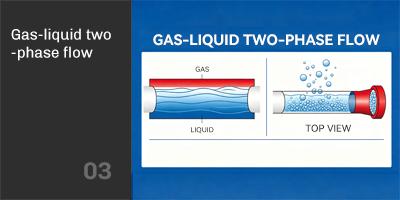
1.Fluid flow may exhibit pulsating flow or two-phase flow (gas-liquid), such as bubbles forming in fermentation broth or transient surges during feed addition, which can cause instability in the flow pattern and exceed the flowmeter’s normal response range. Additionally, if the actual flow rate remains below the lower limit of the measurement range for an extended period, the insufficient signal-to-noise ratio can also result in unstable readings.
2.Signal acquisition delays can also be caused by improper settings for the flowmeter’s filtering coefficient—which fails to account for dynamic changes in flow rate during the fermentation process—or by dirty or damaged sensors.
Effects of temperature and pressure
Although mass flow meters are designed to compensate for temperature and pressure, extreme or rapid changes can still cause measurement errors, particularly in scenarios involving frequent sterilization of fermentation tanks and pressure fluctuations. For example, if gas is introduced before the tank has cooled sufficiently following steam sterilization, this can cause a shift in the thermal diffusion coefficient of the thermal sensor.
Decreased accuracy
If a mass flow meter is operated for an extended period, measurement errors may gradually exceed the factory specifications; this loss of accuracy is primarily due to physical changes in the sensor.
1.During long-term operation, impurities, crystalline deposits, or microbial biofilms in the medium can adhere to the inner surface of the tube walls, altering the vibration and heat transfer characteristics of the measuring tube and thereby affecting measurement accuracy.
2.Aging of sensor components—such as the heating elements in thermal mass flow meters or the wear and tear of the drive coils in Coriolis flow meters—can lead to a decline in signal acquisition accuracy.
3.Frequent CIP/SIP cycles can cause irreversible deformation of the sealing materials, potentially leading to minor internal leaks, which in turn can exacerbate measurement errors.
4.Failure to perform regular calibration in accordance with specifications, or the use of improper calibration methods, prevents timely correction of equipment deviations. This leads to a gradual decline in accuracy over time, a process that is further accelerated by corrosive and abrasive media.
Effects of temperature and pressure
Although mass flow meters are designed to compensate for temperature and pressure, extreme or rapid changes can still cause measurement errors, particularly in scenarios involving frequent sterilization of fermentation tanks and pressure fluctuations. For example, if gas is introduced before the tank has cooled sufficiently following steam sterilization, this can cause a shift in the thermal diffusion coefficient of the thermal sensor.
Decreased accuracy
If a mass flow meter is operated for an extended period, measurement errors may gradually exceed the factory specifications; this loss of accuracy is primarily due to physical changes in the sensor.
1.During long-term operation, impurities, crystalline deposits, or microbial biofilms in the medium can adhere to the inner surface of the tube walls, altering the vibration and heat transfer characteristics of the measuring tube and thereby affecting measurement accuracy.
2.Aging of sensor components—such as the heating elements in thermal mass flow meters or the wear and tear of the drive coils in Coriolis flow meters—can lead to a decline in signal acquisition accuracy.
3.Frequent CIP/SIP cycles can cause irreversible deformation of the sealing materials, potentially leading to minor internal leaks, which in turn can exacerbate measurement errors.
4.Failure to perform regular calibration in accordance with specifications, or the use of improper calibration methods, prevents timely correction of equipment deviations. This leads to a gradual decline in accuracy over time, a process that is further accelerated by corrosive and abrasive media.
-
Comprehensive Solutions
To address the common issues mentioned above, and taking into account the characteristics of biological fermentation processes, a closed-loop management system should be established across three dimensions: “calibration, installation, and early warning.”
Regular Calibration
Regular calibration is essential for maintaining the accuracy of mass flow meters. Rather than blindly following general standards, it is necessary to establish customized calibration schedules and methods based on the severity of fermentation conditions. Calibration methods must adhere to the principle of “aligning with fermentation conditions,” giving priority to the mass method or the standard flow meter comparison method: The mass method involves measuring the mass of the fluid using a calibrated balance while simultaneously recording the flow meter’s output signal, calculating the deviation, and adjusting parameters; The standard flowmeter comparison method requires the use of a reference instrument with accuracy one order of magnitude higher than the flowmeter being calibrated to ensure reliable results. Regarding zero-point calibration, perform an automatic zero-point reset before each batch, with no flow and the system either fully filled with process medium or completely drained. For Coriolis flowmeters, ensure that the medium is not flowing and that the temperature is stable.
Regular Calibration
Regular calibration is essential for maintaining the accuracy of mass flow meters. Rather than blindly following general standards, it is necessary to establish customized calibration schedules and methods based on the severity of fermentation conditions. Calibration methods must adhere to the principle of “aligning with fermentation conditions,” giving priority to the mass method or the standard flow meter comparison method: The mass method involves measuring the mass of the fluid using a calibrated balance while simultaneously recording the flow meter’s output signal, calculating the deviation, and adjusting parameters; The standard flowmeter comparison method requires the use of a reference instrument with accuracy one order of magnitude higher than the flowmeter being calibrated to ensure reliable results. Regarding zero-point calibration, perform an automatic zero-point reset before each batch, with no flow and the system either fully filled with process medium or completely drained. For Coriolis flowmeters, ensure that the medium is not flowing and that the temperature is stable.
Proper Installation
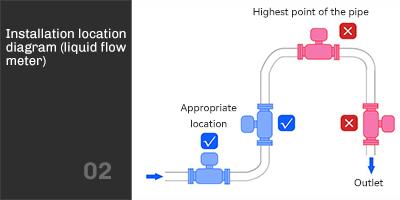
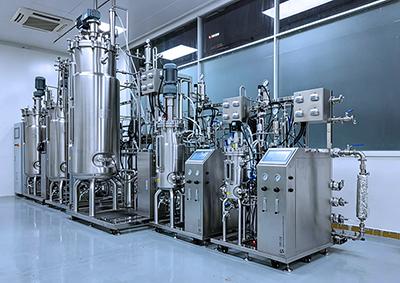
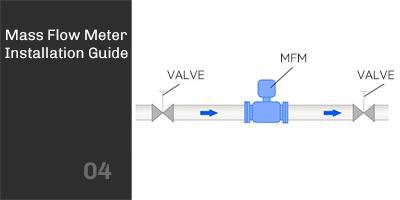
Many flow meter malfunctions are not caused by the equipment itself, but rather by improper installation or pipeline design. In feed lines, flow meters should be installed downstream of the filter and positioned lower than the tank inlet to allow the medium to naturally fill the measuring tube. Gas flow meters should be installed in an inverted U-shape or vertically to prevent condensation buildup, and a vent valve should be installed upstream of the flow meter. Given that fermentation media often contain impurities, a filter should be installed upstream of the flow meter, and impurities should be removed regularly to prevent scaling or clogging of the measuring tube.
Many flow meter malfunctions are not caused by the equipment itself, but rather by improper installation or pipeline design. In feed lines, flow meters should be installed downstream of the filter and positioned lower than the tank inlet to allow the medium to naturally fill the measuring tube. Gas flow meters should be installed in an inverted U-shape or vertically to prevent condensation buildup, and a vent valve should be installed upstream of the flow meter. Given that fermentation media often contain impurities, a filter should be installed upstream of the flow meter, and impurities should be removed regularly to prevent scaling or clogging of the measuring tube.
Fault Warning
Traditional fault-handling approaches typically follow a “repair after a problem occurs” model, which can easily lead to interruptions in the fermentation process and loss of feedstock. Therefore, it is necessary to establish an intelligent early-warning and diagnostic system to enable early detection and rapid resolution of faults. By leveraging the Industrial Internet of Things (IoT), mass flow meters can be connected to the cloud to enable remote diagnosis and maintenance. This allows staff to monitor equipment operating status in real time, adjust parameters remotely, and troubleshoot simple faults. During monitoring, emphasis should be placed on density monitoring. When density exceeds the normal range, the system automatically issues an alert. Additionally, trend alarms for three parameters—gain rate, zero drift, and response time—can be configured in the DCS or SCADA system to detect performance degradation 1 to 2 batches in advance. This approach not only improves equipment management efficiency but also reduces maintenance costs and the risk of unplanned downtime.
As the biofermentation industry undergoes a transition toward intelligent digitalization, mass flow meters will evolve into smart sensing terminals. The deep integration of smart flow sensors with the Internet of Things (IoT) will enable an integrated approach to analysis, control, and early warning, providing the most comprehensive data support for the optimization and improvement of fermentation processes.
The issue of precision in biological fermentation essentially boils down to the compatibility between equipment and process. As a key benchmark in fermentation, the mass flow meter directly determines the quality and yield of the fermentation process. By standardizing zero-point calibration, optimizing installation piping, and implementing diagnostic and early-warning systems, long-term drift of the flow meter can be controlled within acceptable limits. HOLVES specializes in process analysis for biotechnology and provides fermentation users with full-cycle support, ranging from equipment selection and evaluation to on-site calibration and data integration. If you encounter any practical application issues, we welcome your feedback and discussion.
Traditional fault-handling approaches typically follow a “repair after a problem occurs” model, which can easily lead to interruptions in the fermentation process and loss of feedstock. Therefore, it is necessary to establish an intelligent early-warning and diagnostic system to enable early detection and rapid resolution of faults. By leveraging the Industrial Internet of Things (IoT), mass flow meters can be connected to the cloud to enable remote diagnosis and maintenance. This allows staff to monitor equipment operating status in real time, adjust parameters remotely, and troubleshoot simple faults. During monitoring, emphasis should be placed on density monitoring. When density exceeds the normal range, the system automatically issues an alert. Additionally, trend alarms for three parameters—gain rate, zero drift, and response time—can be configured in the DCS or SCADA system to detect performance degradation 1 to 2 batches in advance. This approach not only improves equipment management efficiency but also reduces maintenance costs and the risk of unplanned downtime.
As the biofermentation industry undergoes a transition toward intelligent digitalization, mass flow meters will evolve into smart sensing terminals. The deep integration of smart flow sensors with the Internet of Things (IoT) will enable an integrated approach to analysis, control, and early warning, providing the most comprehensive data support for the optimization and improvement of fermentation processes.
The issue of precision in biological fermentation essentially boils down to the compatibility between equipment and process. As a key benchmark in fermentation, the mass flow meter directly determines the quality and yield of the fermentation process. By standardizing zero-point calibration, optimizing installation piping, and implementing diagnostic and early-warning systems, long-term drift of the flow meter can be controlled within acceptable limits. HOLVES specializes in process analysis for biotechnology and provides fermentation users with full-cycle support, ranging from equipment selection and evaluation to on-site calibration and data integration. If you encounter any practical application issues, we welcome your feedback and discussion.
Want know more news information?
More News
Continuous biomanufacturing overcomes the bottlenecks of batch production and drives the industry toward high efficiency ...
Read article "Why Choose Continuous Manufacturing"
Analyze four types of faults, including drift and delay in the fermentation process, and propose a closed-loop solution i ...
Read article "Common Issues and Solutions for MFM in Fermentation"