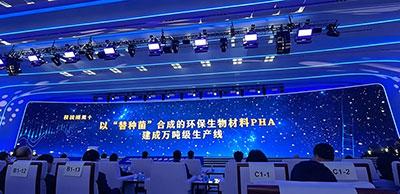
At the Zhongguancun Forum in April 2026, Tsinghua University and Beijing PhaBuilder announced the successful launch of China’s first 10,000-ton-scale industrial production line for polyhydroxyalkanoates (PHA). Leveraging next-generation industrial biotechnology (NGIB) and halophilic bacterial fermentation technology to achieve industrialization, this initiative has effectively reduced PHA production costs and broken through the cost barriers to mass production of the material. This industrialization has directly driven demand for the upgrading of fermentation equipment across the entire industry chain, serving as a key indicator of trends in fermentation equipment upgrades. This article explores the implications of this new process for fermentation equipment solely from the perspective of industry technology.
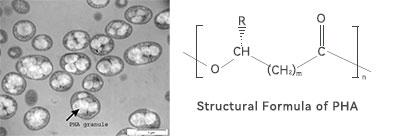
【PHA is a polymeric polyester synthesized by microorganisms through fermentation. It is fully biodegradable in natural environments and addresses the ecological pollution caused by traditional petroleum-based plastics at the source, making it a globally recognized eco-friendly alternative material.】
【PHA is a polymeric polyester synthesized by microorganisms through fermentation. It is fully biodegradable in natural environments and addresses the ecological pollution caused by traditional petroleum-based plastics at the source, making it a globally recognized eco-friendly alternative material.】
Traditional fermentation relies on conventional engineered strains, which have poor resistance to contaminating microorganisms. As a result, the entire process requires high-temperature, high-pressure sterilization steps, and production lines must be equipped with a full suite of supporting equipment, including steam, purified water, and sterile filtration systems. This leads to persistently high costs for utilities and infrastructure. Due to these production cost constraints, PHA has historically been used only in small batches for medical consumables, making large-scale mass production difficult to achieve. Consequently, traditional sterilization-based fermentation systems have become a key obstacle to industry-wide capacity expansion.
The R&D team screened and engineered halophilic bacterial strains adapted to extreme environments. Through gene editing, they optimized metabolic pathways. The engineered strains naturally resist contamination by foreign microorganisms in high-salt fermentation environments, eliminating the need for full-line sterilization in the production process. The new process not only reduces PHA production costs by more than 40% and enables open-system continuous fermentation, but the unique high-salt, high-alkali fermentation conditions also allow for targeted improvements in the corrosion-resistant materials and sealing structures of fermenter.
Based on halophilic bacteria, Chen Guoqiang’s team has developed a novel process system known as NGIB technology. Replacing the traditional closed-batch fermentation model, this technology uses seawater instead of freshwater, eliminates the need for sterilization equipment, and enables continuous, open-system production. The 10,000-ton production line in Yichang has achieved highly automated operation using this process, breaking free from restrictions imposed by overseas bacterial strains and process patents. By focusing on design, material selection, and intelligent systems, it has set new R&D standards for domestic fermentation equipment manufacturing.
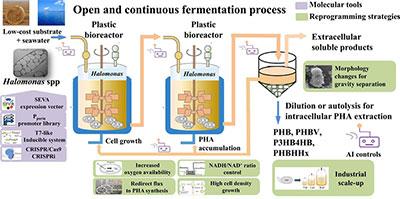
Sterilization-free open fermentation is an innovative concept introduced by the NGIB process, but it has not yet become an industry-wide production standard. This development has attracted the attention of major fermentation equipment manufacturers.
Taking HOLVES as an example, our fermenters are still designed according to established aseptic processes and come standard with complete sterilization and sealing systems, meeting the vast majority of market demands for fermentation production that requires strict sterilization. At the same time, HOLVES is actively monitoring developments in new fermentation technologies to lay the technical groundwork for a next-generation fermenter that is lighter in weight and allows for the removal of sterilization modules as needed.
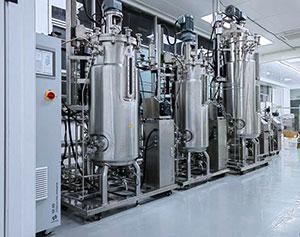
When using seawater or high-salinity culture media, the risk of chloride ion corrosion of metal materials increases. Standard 304 stainless steel is often inadequate for such applications, making 316L stainless steel the minimum requirement. Additionally, the polishing quality of the tank’s inner walls, weld treatment, and gasket material all play a critical role in determining long-term operational reliability. This implies that if customers adopt similar high-salinity fermentation processes in the future, fermenters will require higher standards for material selection and surface treatment processes than those used in traditional biological fermentation.
The establishment of a 10,000-ton-scale PHA plant marks the industry’s entry into the era of continuous, intelligent mass production, requiring equipment equipped with remote parameter control and multi-parameter coordinated adjustment systems. Currently, manufacturers such as HOLVES have introduced fermenters equipped with intelligent central control systems capable of real-time monitoring and regulation of key fermentation parameters—including temperature, dissolved oxygen, and pH. These systems also feature modular, standardized designs that support linear scale-up from pilot to industrial production lines. This design philosophy can similarly be adapted to meet the needs of various new bioprocesses.
The 10,000-ton PHA project represents a landmark achievement in the industrialization of China’s biomanufacturing sector. NGIB technology breaks away from traditional frameworks, driving the fermentation equipment industry to transition from conventional aseptic systems toward diversified, corrosion-resistant, and intelligent upgrades. Process R&D and equipment manufacturing complement one another; HOLVES will also build on current market demand to strengthen its product capabilities, keep pace with the industry’s long-term development trajectory, and continuously iterate its products.
This article is intended solely as a technical discussion within the industry; HOLVES is not a participant in this project.
News:https://news.bjd.com.cn/2026/04/07/11674682.shtml
Source of Figure 3:Synthetic Biology Journal
Want know more news information?
More News



With the Launch of a 10,000-Ton PHA Production Line, Should Fermenters Be Upgraded? ...
Read article "Industry News | Ten-Thousand-Ton PHA Production Line Launched"
Novo Nordisk’s semaglutide patent has expired, and the GLP-1 drug market is booming. ...
Read article "The patent for semaglutide has expired"
HOLVES explores the future of healthcare with you ...
Read article "New breakthroughs in cell therapy"
The technical platforms for systems biology are omics such as genomics, transcriptomics, proteomics, metabolomics, intera ...
Read article "Systems Biology and Genomics Technology丨fermenter"
Increasing the culture density of engineered bacteria and increasing the specific productivity of the product ...
Read article "High Density Fermentation of Synthetic Biology and Engineering Bacteria"