-
Why does ETH need Twin220?
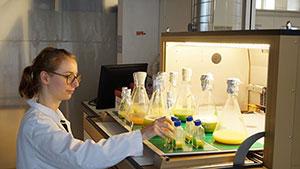
Julia Baumgartner working on different microalgae cultivations in our shaking incubators (Photograph: Alexander Mathys)
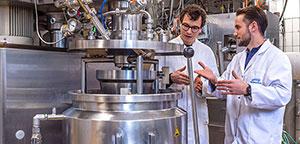
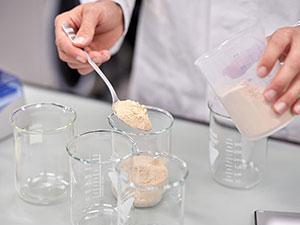
Lukas Böcker and Leandro Buchmann working on food processing. (Photograph: Rainer Spitzenberger)
The design goal of the Twin220 is precisely to make this “parallel comparison” simple, reliable, and repeatable.
-
Why Choose Twin220?
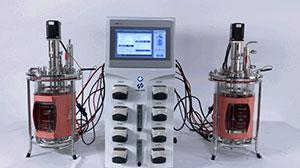
2. Independent Control of Two Vessels: The two vessels can operate simultaneously under different parameters. By initiating comparative experiments on the same day, preliminary growth differences can be observed within a few hours, significantly shortening the process optimization cycle.
3. Robust Key Configuration: A Siemens control system, high-precision peristaltic pumps, the H-Mix® stirring system, and the Feed-Sup® intelligent feeding strategy—these features collectively ensure the comparability of data from both vessels.
4. Complete and Traceable Data: The Meta-Tri® audit trail function and the HF-Control V2.2 control system record operations in real time and generate growth curves, meeting requirements for data integrity.
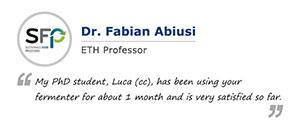
The future of microalgal protein ultimately hinges on a series of precise comparative experiments. 7 liters, two tanks running in parallel. While this scale is insignificant in the context of industrial fermentation, in the ETH lab, it represents the shortest path from “hypothesis” to “conclusion.”
Fermenters won’t change the world. But the data generated by fermenters will!
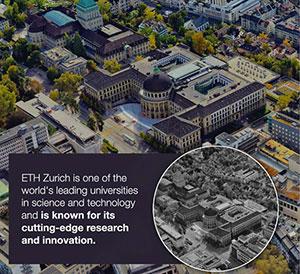
*Image source: ETH Zurich website
Want know more news information?

HOLVES undergoes a full-process third-party audit every year. We welcome experts’ scrutiny and place even greater impor ...
Read article "HOLVES Quality Assurance: Passed ISO Annual Audit"
HOLVES cross-applies its pharmaceutical ultrafiltration expertise to semiconductor nano‑silver manufacturing, deliverin ...
Read article "From Pharma to Semiconductors: A Skid-Ready Success"
Bioreactor equipment manufactured in China is also capable of contributing to cutting-edge research in global food scienc ...
Read article "HOLVES Twin220 Installed at ETH Zurich Laboratory"
HOLVES returns to the technology trade fair, showcasing its specialized expertise through cutting-edge innovations, prove ...
Read article "HOLVES Successfully Attends the 4th China Science and Technology Fair"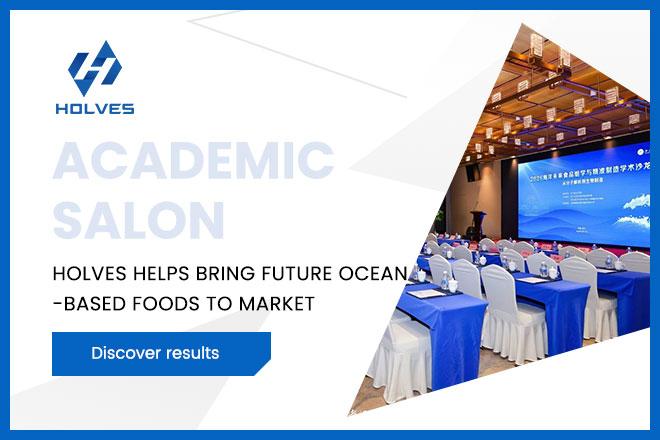
HOLVES Helps Bring Future Ocean-Based Foods to Market ...
Read article "HOLVES Attends Academic Salon"
HOLVES Showcases New Product Lineup at First Post-Holiday Fermentation Exhibition, Crowds Attractions Reflecting Strong S ...
Read article "HOLVES Attends BIO CHINA 2026"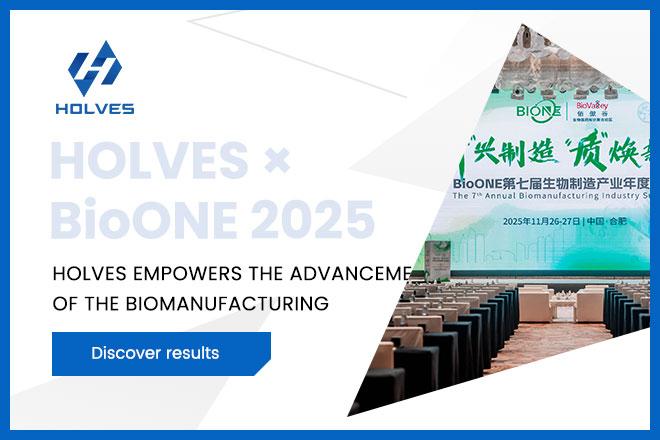
HOLVES leverages intelligent equipment to advance scientific research and industrial transformation, propelling biomanufa ...
Read article "HOLVES presents at the BioONE 2025 Summit"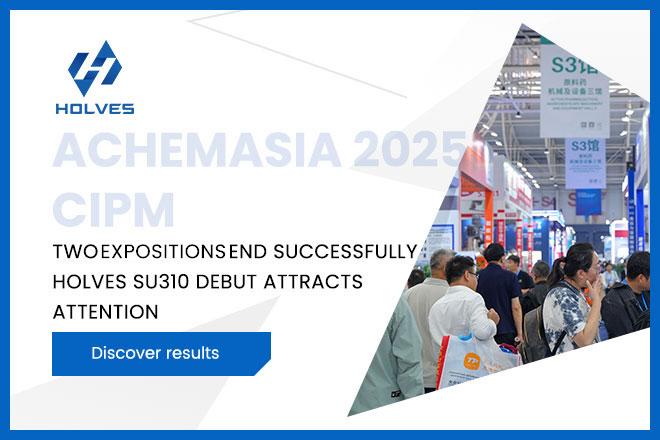
Two exhibitions end successfully, HOLVES Su310 debut attracts attention ...
Read article "ACHEMASIA 2025 × CIPM"