In the fermentation process, there are usually two types of fermentation: triangular flask fermentation and fermenter fermentation. Triangular flask fermentation is experimented in the pre-fermentation stage. So what exactly is the difference between two ways?
1. The difference between triangular flasks and fermenters
- Inoculation
- Stirring
Fermentation tank is by mechanical stirring, the shear force for the strain is larger, and the damage of the bacterium is much greater than the triangle flask.
- DO
The fermentation tank can control the air passed in, and through stirring and aeration, the liquid and air are mixed evenly, and the dissolved oxygen parameters can be controlled.
- pH
The pH of fermentation tank is adjusted by adding acid and alkali through direct flow, which can control its value within the set range.
- Sterilization
- Sampling
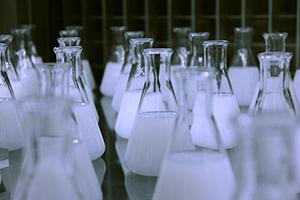
Triangles can obtain experimental fermentation data more quickly under conditions such as limited space. However, fermenters are more accurate in the fermentation experimental data obtained because of their good confinement and controllable fermentation parameters. Triangular flask fermentation is also mainly to provide reference data for subsequent in-tank fermentation. Due to the different strain types, the fermentation method needs to be determined on a case-by-case basis.
Here is the Holves brand website, https://www.bjholves.com/. Providing different types of industry information, technical knowledge, and solutions, we have developed and produced several new laboratory fermenter, bioreactor, tangential flow filtration system and other equipment to meet your needs from experimental to industrial production.
More questions to solve?
More Questions
More Questions
[Microcarriers] Q: What are microcarriers, and what role do they play in cell culture? A: Microcarriers are a type of microspherical scaffold used in cell culture. Typically ranging in size from 50-350 m in diameter, these carriers provide a surface for cells to adhe...
[Stainless Steel Fermenters] HOLVES Su310 intelligent stainless steel fermenter is a new generation of pilot and small-scale production equipment, integrating hardware innovation and intelligent control. In the pharmaceutical industry, stainless steel fermenters are crucial for p...
[Microcarriers] Microcarrier (Microcarrier) means a class of microspherical scaffolds with a diameter of 50-350 m and a density slightly higher than that of water, which have biological functions such as cell culture, proliferation and delivery. During the process of...
[Bioreactors] A bioreactor precisely controls key process parameterssuch as temperature, pH, dissolved oxygen (DO), and agitation speedto provide optimal growth and metabolic conditions for microorganisms, animal and plant cells, or enzymes. This enables efficient ...
[Bioreactors] Biological Reactions in Bioreactors: Advanced Solutions for Efficient Fermentation...
[Ceramic Membrane Filtration] Ceramic membrane filtration is a physical separation process that uses ceramic materials with porous structures to separate particles, microorganisms, and dissolved substances from liquids....
[Tangential Flow Filtration] The Application of Tangential Flow Filtration Cassettes...
[Photobioreactor] Photobioreactors are specialized cultivation systems designed to grow photosynthetic microorganisms such as microalgae, cyanobacteria, and other photosynthetic cells under controlled environmental conditions. Lab-scale photobioreactor systems serve as...
[Four-Piston Diaphragm Pumps] What is a Four-Piston Diaphragm Pump? How Does a Four-Piston Diaphragm Pump Work? What Are the Key Advantages of Four-Piston Diaphragm Pumps?...
[Fermenters] Optimizing Fermenters for Enhanced Production...
